

The best time of day to take g2 test ontario isn’t necessarily the hour with the lightest traffic. A quieter road can help you feel at ease, but your alertness, comfort behind the wheel and ability to manage the conditions matter just as much.
If you’re weighing a morning, midday or afternoon appointment, you may be concerned about rush-hour traffic, feeling rushed or choosing a slot that doesn’t fit your routine. There’s no magic hour that guarantees an easier test. The right choice is one that gives you time to arrive calmly and feel ready to focus.
This guide compares the practical trade-offs of morning, midday and afternoon G2 tests, and offers ways to prepare for likely conditions. You’ll also find a checklist for comparing appointment options without letting the first available slot dictate your decision. Book Your Road Test offers independent booking assistance and a cancellation finder, but it is unaffiliated with the Ontario Ministry of Transportation. Its services carry an additional administration fee, and monitoring for openings doesn’t guarantee a preferred appointment.
Key Takeaways
- Compare morning, midday and afternoon appointments against your routine and the time of day when you feel most alert.
- The best time of day to take g2 test ontario depends on your readiness and the conditions you’re comfortable handling, not a guaranteed “easy” hour.
- Traffic can affect the drive, but busier roads don’t automatically make a test harder or easier.
- Before choosing an appointment, consider your sleep, travel buffer and usual daily schedule.
- Confirm current booking details through official DriveTest information. Book Your Road Test is a separate service with an additional administration fee.
Best time of day to take your G2 test in Ontario: what timing can and cannot change
No single hour works best for every G2 candidate or test route. The best time of day to take g2 test ontario depends partly on when you feel alert and prepared, as well as the traffic and visibility conditions you may encounter. Timing can shape the drive, but it can’t guarantee a test result.
The G2 road test is an on-road assessment of your driving skills. It’s different from the written knowledge test earlier in the licensing process. The G2 is a stage in Ontario's graduated licensing system, which begins with a G1 licence.
Weigh your readiness, traffic, visibility and routine together. No one factor makes an appointment right for everyone.
Why the same appointment time can feel different from one test day to another
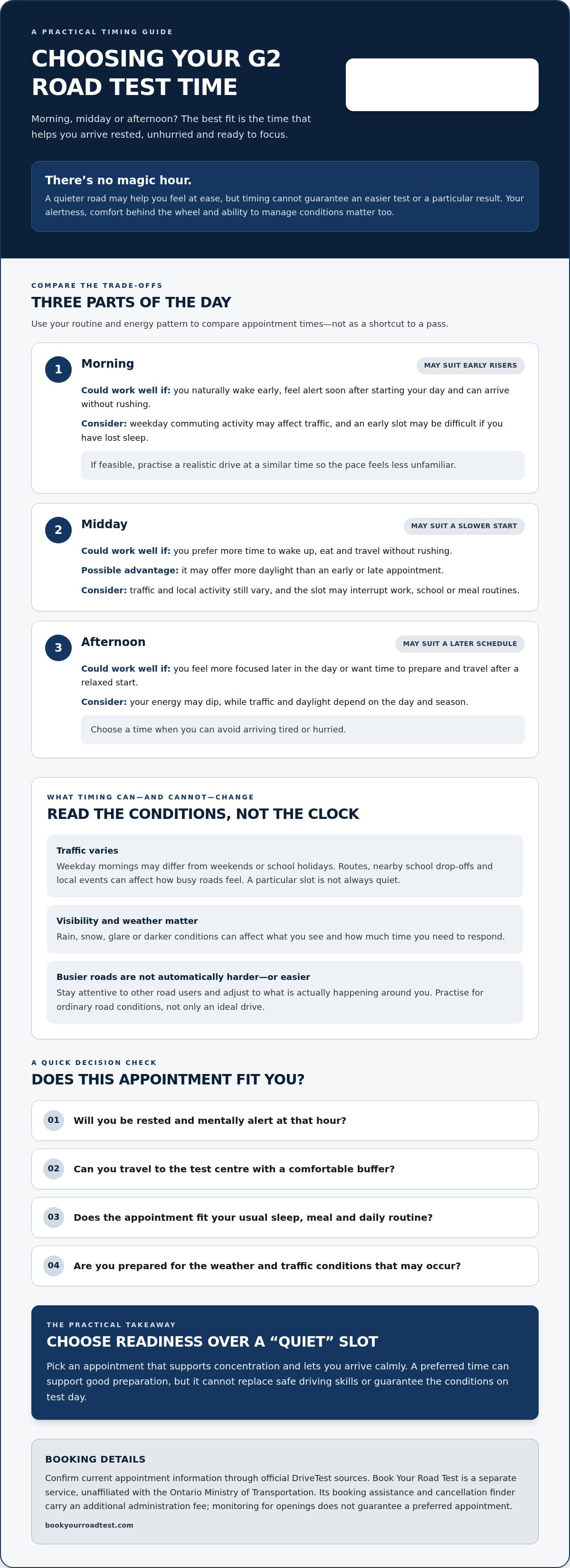
A weekday morning may bring different road activity than a weekend or school holiday. Weather and daylight matter too: rain, snow, glare or darker conditions can affect what you see and how much time you need to respond. Nearby activity, including school drop-offs or local events, may also affect how busy roads feel.
Routes and traffic patterns vary, so don’t assume a particular appointment slot will always be quiet. Practise for ordinary road conditions, not just the ideal scenario you experienced during a lesson or drive. Stay attentive to other road users and adjust to what’s actually happening around you.
What a good test time should do for you
A suitable appointment gives you the chance to arrive alert, unhurried and ready to focus. Consider whether the time fits your usual sleep and meal routine, and leave enough time for travel so you aren’t stressed before the test. If you’re not at your best early in the morning, an early slot may not suit you, even if you’re hoping for lighter traffic.
Use this quick check before choosing:
- Will you be rested and mentally alert at that hour?
- Can you travel to the test centre with a comfortable buffer?
- Does the appointment fit your usual daily routine?
- Are you prepared to drive in the weather and traffic conditions that may occur?
A preferred time can support good preparation, but it can’t replace safe driving skills. Choose an appointment that helps you concentrate, then be ready to respond to the conditions on the day.
Morning, midday, or afternoon: compare G2 test times in Ontario
Each part of the day has different trade-offs. Use this comparison to narrow down the best time of day to take g2 test ontario for your routine, rather than treating any slot as a shortcut to a pass.
| Time period | Possible advantages | Possible drawbacks | Who may prefer it |
|---|---|---|---|
| Morning | May fit a familiar start to the day and feel comfortable if you’re an alert early riser. | Weekday commute activity may affect traffic, and an early appointment can be difficult if you’ve lost sleep. | Candidates who naturally wake early and can arrive without rushing. |
| Midday | Can allow a slower morning and may offer more daylight than an early or late appointment. | Traffic and local activity can still vary; the slot may interrupt work, school or meal routines. | Candidates who feel more settled later in the morning and can plan travel comfortably. |
| Afternoon | May suit a later daily schedule or give you time to prepare and travel after a relaxed start. | Energy levels can dip, while traffic and daylight conditions depend on the day and season. | Candidates who are more focused later in the day and can avoid arriving tired or hurried. |
Could a morning G2 test be the right choice?
A morning appointment may feel familiar if you usually wake early and concentrate well soon after starting your day. Weekday commuting activity can affect the drive, but it varies with the route and day. Rather than assuming the roads will be quiet, consider the conditions you’re likely to travel through. If feasible, practise a realistic drive at a similar time so the pace feels less unfamiliar.
When might midday or afternoon suit you better?
Midday can work well if you prefer more time to wake up, eat and travel without rushing. Afternoon may fit a later energy pattern, but consider whether you’ll still feel focused and whether reduced daylight could be a factor in that season. School, work and general traffic patterns differ by day and location. News coverage of differing pass rates also discusses how traffic and route complexity can shape the driving environment, not a guaranteed advantage at a particular time.
Prioritize a slot you can reach calmly without sacrificing sleep. If you’ve decided what timing works for you and want booking assistance, Book Your Road Test’s G2 booking service is an optional independent service. It is unaffiliated with DriveTest and the Ontario Ministry of Transportation, and charges an additional administration fee.
Does rush hour make an Ontario G2 road test harder?
Not automatically. Busier traffic can give you more to observe and respond to, but a quieter road doesn’t guarantee an easier test either. Your readiness, the conditions on the day and your ability to make safe, well-timed decisions all matter. The appointment time alone can’t tell you how demanding the drive will feel.
Traffic may bring familiar situations you’ve practised, such as adjusting your following distance, checking before changing lanes and responding patiently when vehicles slow down. Congestion can also add pressure if you feel rushed or find it difficult to focus with several things happening around you. Conditions depend on the day and route, not simply the appointment time.
Prepare to drive safely in ordinary traffic instead of trying to avoid every busy road. That’s more useful than searching for a supposedly perfect hour. The best time of day to take g2 test ontario is a personal choice, and it can’t ensure a particular route or traffic level.
Potential trade-offs of a busier appointment
More traffic may give you a chance to use skills you’ve practised in realistic conditions. You may need to observe other road users carefully, signal clearly and make considered decisions without reacting abruptly. If busier roads leave you tense, however, the added activity may make it harder to stay settled. Think about how you handle similar conditions during practice, while remembering that test-day traffic can differ.
How to prepare without relying on a quiet-road test
Build experience across varied, legal driving conditions instead of practising only on familiar, empty roads. During appropriately supervised practice, focus on:
- Checking mirrors and blind spots as appropriate to the situation.
- Signalling clearly and giving other road users time to respond.
- Maintaining a safe following distance as traffic speeds change.
- Making calm, deliberate decisions at intersections and when changing lanes.
Follow the conditions on your licence, and don’t practise alone unless you’re legally permitted to do so. If you’re unsure whether your skills are ready for the test, consider asking a qualified driving instructor for an assessment and specific feedback. A test appointment is not the time to discover that you’ve only prepared for ideal conditions.
How to choose your G2 test time: a practical decision checklist
Start with your real-life constraints, not a rule that one hour is always best. This checklist can help you compare appointments and choose a slot that gives you the best chance to arrive rested and focused.
- Start with sleep and alertness. Consider when you normally wake up and when you feel most clear-headed. Don’t choose an early appointment if getting there would mean cutting into sleep.
- Check your travel buffer. Think about how you’ll get to the test centre, allow time for possible delays and avoid a plan that leaves you rushing. Confirm check-in details and current instructions through official DriveTest information.
- Match the time to your daily routine. Consider meals, school, work and other commitments. A slot that fits your usual rhythm may help you feel more settled than one that disrupts it.
- Consider daylight and likely conditions. Think about whether the appointment may fall in brighter or darker conditions for the season, and whether you’re comfortable driving in them. This can guide your preparation, but it won’t reveal the exact route or traffic on test day.
- Compare the available options. If more than one slot works, weigh the trade-offs against how prepared you feel. If you’re unsure about your driving readiness, seek feedback from a qualified instructor rather than choosing based on timing folklore.
A useful test-time checklist covers sleep, alertness, travel, routine and expected conditions. It isn’t an official scoring rule or a promise of a particular result.
Match the appointment to your energy and travel plans
Pick a time that allows you to sleep adequately, prepare without rushing and arrive with enough time to follow the centre’s current check-in instructions. Review official DriveTest information for the latest appointment requirements instead of relying on an old message or someone else’s experience. A manageable journey matters: stress from a tight travel plan can make it harder to settle before you begin.
Use practice to test your timing assumptions
If feasible, do a supervised practice drive or mock road test at a similar time of day. Notice whether you can stay composed and focused, and consider how daylight and general traffic feel. Practice conditions can differ from the actual test route, so use the exercise to learn about your comfort, not to rehearse exactly what will happen. Practice supports preparation, but it can’t guarantee a pass.
Once you’ve chosen your timing criteria, you can use Book Your Road Test’s G2 booking service for booking assistance. It’s an independent third-party service, unaffiliated with DriveTest and the Ontario Ministry of Transportation, and charges an additional administration fee.
Booking an Ontario G2 test at a time that works for you
Once you’ve decided which appointment periods suit your routine, check what’s available. Use official DriveTest information to confirm current booking requirements, appointment details and test-day instructions. Availability can change, so verify the details before arranging transportation or making other plans around your G2 road test.
What to check before confirming an appointment
Before finalizing your plans, make sure the booking is for the correct test class and review the date, time and DriveTest centre shown in your confirmation. Check official guidance for current identification requirements and test-day instructions. Build in a travel buffer so a delay doesn’t leave you rushing to check in.
If you’re considering changing an existing appointment, review the current DriveTest rescheduling rules first. Don’t assume a change is possible on the same terms as a previous booking. Confirm the updated appointment details before making new travel arrangements.
Official booking and independent booking assistance
DriveTest is the official source for Ontario road-test booking information. Book Your Road Test is a separate, independent third-party service that helps people schedule G2 and other road tests. It isn’t DriveTest and isn’t affiliated with the Ontario Ministry of Transportation. Its booking assistance and cancellation finder carry an additional administration fee, so compare the convenience with the fee before deciding whether to use it.
The cancellation finder monitors for openings that may help you find an earlier appointment. It doesn’t guarantee an earlier date or a particular time of day. If you’re using it to look for an appointment that better fits the best time of day to take g2 test ontario for your routine, keep your preferences realistic and confirm appointment details through the appropriate official information.
You can book through official DriveTest channels or consider independent booking assistance if that convenience suits your needs. Either way, choose a time you can prepare for and reach calmly. To review the optional service, explore G2 road test booking assistance.
Choose a test time that sets you up to focus
The best time of day to take g2 test ontario is the appointment that fits your alertness, routine and travel plans, not a supposedly magic hour. Morning, midday and afternoon each have trade-offs, and traffic, daylight and road conditions can vary. Choose a slot you can reach without sacrificing sleep or rushing, then prepare to respond safely to the conditions you encounter.
Check current booking details and test-day instructions through official DriveTest information. If you’d like help scheduling, Book Your Road Test is an independent third-party service for G2 road test bookings across Ontario. It isn’t affiliated with DriveTest or the Ontario Ministry of Transportation, and its booking assistance and cancellation finder carry an additional administration fee. The finder monitors for appointment openings, but an earlier or preferred time isn’t guaranteed.
If that convenience suits your needs, explore G2 road test booking assistance. Choose a realistic appointment and prepare steadily so you can arrive ready to focus.
Frequently Asked Questions
What is the best time of day to take a G2 test in Ontario?
There’s no universally best hour. The best time of day to take g2 test ontario is one when you’re alert, can arrive without rushing and feel prepared for changing road conditions. Morning, midday and afternoon appointments each have possible advantages and drawbacks. Traffic and daylight depend on the date and route, so choose a time that fits your routine rather than expecting a particular slot to guarantee an easier test or a pass.
Is a morning G2 test easier in Ontario?
Not necessarily. A morning appointment may suit you if you’re rested and focused early, but weekday traffic and visibility can vary with the day, season and route. Consider whether you can sleep well the night before and travel to the test centre calmly. Don’t choose a morning slot only because you’ve heard it’s always quieter or easier. Your comfort and readiness matter more than assumptions about the hour.
Is it better to take a G2 test during rush hour?
Rush hour isn’t automatically better or worse for a G2 test. Busier roads may involve traffic interactions you’ve practised, but congestion can feel demanding if you’re uncomfortable driving in it. Conditions vary, and you can’t assume what route you’ll take or how busy it will be. Choose a time that suits your readiness, then practise in varied conditions so you’re prepared to observe, signal and make safe decisions around other road users.
Can I choose the time of my G2 road test in Ontario?
Your appointment options depend on current availability and the official booking process. Check current DriveTest information for available dates and times, then confirm your appointment details before arranging travel. An independent booking service may also assist with scheduling, but review what it provides and any additional administration fee before deciding. Availability can change, so avoid making plans around a time you haven’t confirmed.
Should I take a mock road test before my G2 test?
A mock road test or practice drive can help you identify skills to work on and assess how focused you feel at a particular time of day. It isn’t an official assessment and can’t guarantee a pass or reproduce every test condition. Use the experience to guide your preparation. If you’re unsure whether your driving skills are ready, consider asking a qualified driving instructor for feedback.
Does the time of day affect G2 test results in Ontario?
The time may affect traffic, visibility and how rested or focused you feel, but it doesn’t determine the result by itself. Your driving decisions and the conditions on the day matter. There’s no reliable reason to assume one appointment period guarantees a better outcome. Choose a time that supports your preparation, practise for varied conditions and review current official test-day instructions before your appointment.
Can Book Your Road Test guarantee an earlier G2 test appointment?
No. Book Your Road Test’s cancellation finder monitors for openings that may appear, but it doesn’t guarantee an earlier date or your preferred time. Availability can change, and an opening may not suit your schedule. Book Your Road Test is an independent third-party service, unaffiliated with DriveTest and the Ontario Ministry of Transportation. Its booking assistance and cancellation finder carry an additional administration fee.


