

What if your turn signal stops working just before test day? If you’re wondering, “what if my turn signal light is out before test,” treat it as a safety issue, not a minor inconvenience. A signal that won’t flash or is difficult to see may affect whether the vehicle is suitable for the road test.
It’s stressful to find a fault when there’s little time to diagnose it or arrange a repair. Don’t guess at the cause or assume the examiner will let you proceed with a faulty signal. First, check the vehicle safely while it’s parked. Then decide whether it needs repair and whether to keep your appointment.
This guide explains how to check which signals are working, what common symptoms may indicate, and when to stop troubleshooting. It also covers what to consider on test day and how Book Your Road Test’s scheduling and cancellation finder services can help if you decide to change your plans.
Key Takeaways
- A faulty signal is a safety concern. Check the applicable test requirements rather than assuming the test will proceed or be cancelled.
- If you’re asking “what if my turn signal light is out before test,” begin with a safe, parked check of the front and rear signals on both sides.
- A dark lamp or rapid dashboard flash can be a clue, but it doesn’t confirm the cause. Leave unfamiliar electrical repairs to a qualified professional.
- If the signal still fails, consider whether the vehicle is safe to drive and review the current official road-test guidance for your jurisdiction.
- Book Your Road Test is an independent third-party scheduling service. It is not affiliated with the Ministry of Transportation, and its services carry an administration fee.
Turn Signal Out Before a Road Test? Start With Safety, Not Assumptions
A faulty turn signal shortly before your road test can make it tempting to rush into a decision. If you’re asking, “what if my turn signal light is out before test,” start by treating it as a safety concern. Signals communicate your intentions to other road users, so don’t assume the vehicle is ready for the test until you know what is and isn’t working.
Check whether the problem appears limited to one lamp or affects more of the indicator system. One front or rear lamp may be dark while the other signals still flash. If several signals fail, or they work inconsistently, the cause may be more than one burned-out bulb. An observation can help identify the symptoms, but it can’t confirm the fault or establish that the vehicle is safe to use.
Takeaway: A malfunctioning turn signal is not just a cosmetic issue.
Why turn signals matter during a driving test
Indicators tell nearby drivers, cyclists and pedestrians that you intend to turn or change lanes. Clear, timely signals help others anticipate your movement and respond safely. Using them correctly matters on a test route, but their purpose goes beyond test procedure: they help make your intentions visible in everyday traffic.
Hazard lights serve a different purpose, and don’t assume hand signals can replace a working indicator during a road test. If a lamp is out or the system behaves unpredictably, identify the problem while parked rather than trying to work around it on the road. Check the vehicle safely, then decide whether it’s appropriate to use.
Does a faulty turn signal automatically cancel the test?
Don’t assume the test will automatically proceed, or that it will automatically be cancelled. The vehicle’s condition and the decision to begin the test are separate considerations. Requirements and procedures depend on the authority responsible for the test, so another driver’s experience may not apply to your situation.
Before deciding what to do, consult the current official road-test guidance for your jurisdiction. Look for information about vehicle condition and what happens when a safety-related item isn’t working. If the instructions don’t address your situation, use the testing authority’s published contact channel for clarification. Uncertainty about the decision is not evidence that the vehicle is roadworthy.
How to Check a Turn Signal That Is Not Working
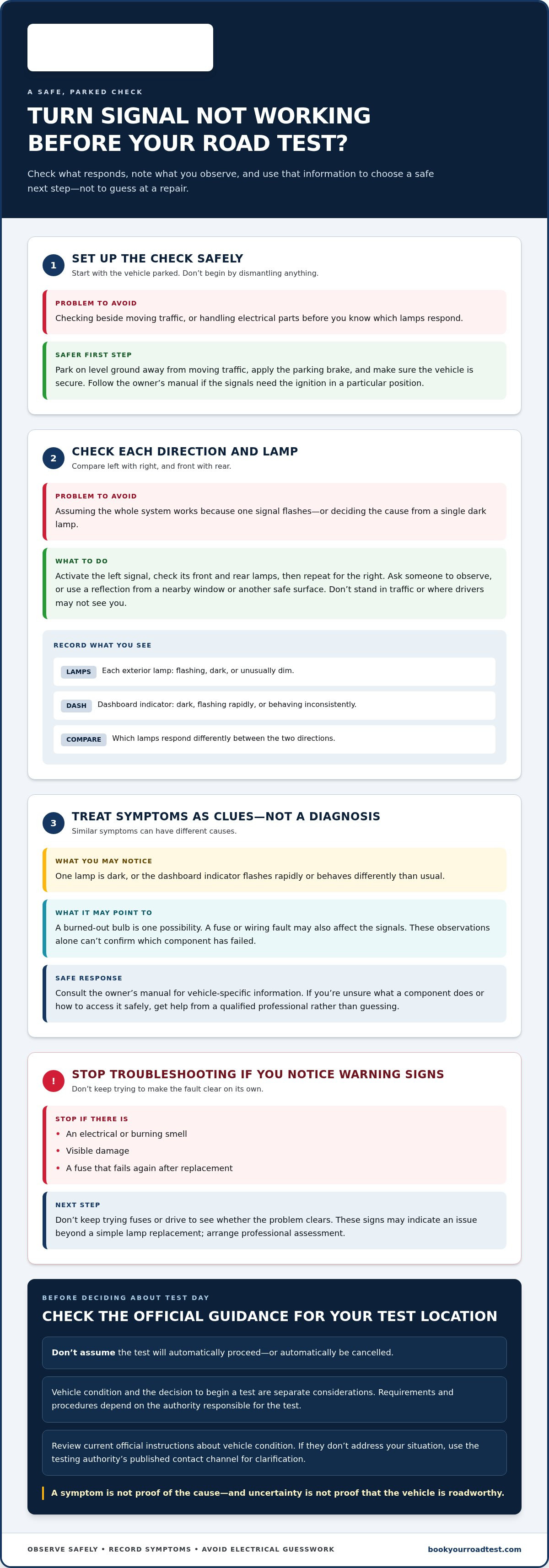
Start with observation, not tools. Park on level ground away from moving traffic, apply the parking brake and make sure the vehicle is secure. The signals may require the ignition to be in a particular position, so follow the owner’s manual. Don’t remove covers or handle electrical parts during this first check. If you’re thinking, “what if my turn signal light is out before test,” first establish which lamps respond and what the dashboard indicator does.
Check every signal lamp and dashboard indicator
Test the left and right signals separately. With each direction activated, check the front and rear lamps on that side. Ask someone to observe them, or use a reflection from a nearby window or another safe surface. Don’t stand in traffic or walk around the vehicle where other drivers may not see you.
- Note whether each exterior lamp flashes, stays dark or appears unusually dim.
- Watch the dashboard indicator. Record whether it stays dark, flashes rapidly or behaves inconsistently.
- Repeat the check for the other direction and note which lamps respond differently.
A rapid dashboard flash or an indicator that behaves differently than usual can be a clue that a lamp or circuit needs attention. It isn’t a diagnosis: symptoms vary between vehicles, and the cause may not be visible from outside. Write down what you observed so you can describe the problem accurately without guessing or dismantling anything.
Common causes: bulb, fuse, or electrical fault
A burned-out bulb is one possibility, particularly if one exterior lamp is dark while the others appear to work. A fuse or wiring fault may also affect the signals, but symptoms alone can’t identify the failed component. Consult the owner’s manual for vehicle-specific information. If you’re unsure what a component does or how to access it safely, get qualified help before attempting a repair.
Stop troubleshooting if you notice an electrical or burning smell, visible damage, or a fuse that fails again after replacement. Don’t keep trying fuses or drive to see whether the problem clears. These signs may point to an issue beyond a simple lamp replacement and need professional assessment.
Vehicle-condition and road-test requirements are set by the relevant authority, so guidance from another jurisdiction may not apply. For your appointment, rely on current official instructions for the place where you’ll take the test, especially when deciding whether a vehicle with a signal fault can be used.
If the fault remains and you decide to change your appointment, road-test booking assistance from Book Your Road Test can help with scheduling. The service is independent of the Ministry of Transportation and DriveTest, and an administration fee applies.
Repair Options: What You Can Check and When to Get Help
Once you’ve noted which lamps fail and how the dashboard indicator behaves, use those observations to choose a safe next step, not to guess at a repair. A bulb, fuse, switch or wiring problem can produce overlapping symptoms, and the correct part and procedure depend on the vehicle. If you’re asking, “what if my turn signal light is out before test,” a symptom guide can help you decide whether to consult the manual or stop and arrange a professional diagnosis.
A symptom can narrow the possibilities, but it can’t establish the fault.
One exterior lamp is dark: A failed bulb is one possibility. Check the vehicle manual for the correct bulb information and safe inspection procedure before handling anything.
Several signals fail or none respond: A fuse, switch or another electrical issue may be involved. The symptom alone won’t identify the faulty component.
A lamp works intermittently: A loose connection or wiring fault is possible. Inconsistent operation needs proper assessment, not repeated testing on the road.
A replacement fuse fails again: This may indicate an underlying electrical problem. Stop replacing fuses and seek qualified repair help.
When a basic bulb check may be appropriate
If the manual describes an accessible bulb check and you’re comfortable following it, work only with the vehicle safely parked and switched off as instructed. Bulb access varies by make and model, and some lamps require steps that aren’t obvious from the outside. Follow the vehicle-specific procedure and use the specified replacement type. Don’t force a cover or guess at a part.
Stop if a component is hot, damaged, difficult to reach or unfamiliar. A rushed attempt can injure you or damage the lamp assembly. If the manual’s instructions aren’t clear, leave the repair to a qualified technician. After a bulb change, check every signal lamp to confirm whether the problem is resolved.
When an electrical issue needs professional diagnosis
Repeated fuse failure, visible wiring damage or multiple failed lamps are reasons to stop DIY troubleshooting. Electrical testing or disassembly may require vehicle-specific knowledge and equipment. Avoid probing wires or replacing unfamiliar components based on a guess; incorrect work could cause further damage or leave the indicators unreliable.
When arranging an assessment, describe what you observed: which side failed, whether the front or rear lamp was affected, and what the dashboard indicator did. These details can help guide diagnosis without treating a clue as proof. After the repair, verify that both directions work consistently at every exterior lamp before deciding whether the vehicle is ready for your road-test plans.
What to Do on Test Day if the Turn Signal Still Fails
A failed signal can make an already time-sensitive morning more stressful. Keep the decisions in order: assess whether the vehicle can be operated safely, arrange a repair if needed, check the current official test requirements, then decide what to do about the appointment. If you’re unsure whether the vehicle is safe to drive, don’t use the trip to the test to find out.
Vehicle-condition requirements and decisions about proceeding depend on the applicable testing process. Don’t rely on a friend’s experience or assume an examiner will overlook a defect. Check the current official guidance for the jurisdiction where your appointment is booked, including the applicable rescheduling terms.
- Assess safety: If the signal remains unreliable and safe operation is in doubt, don’t drive the vehicle.
- Seek repair: Have the fault addressed before relying on the vehicle for the test.
- Verify requirements: Review official vehicle-condition guidance and appointment rules.
- Decide: Keep or change the appointment based on the repaired vehicle’s condition and the official information.
If the signal is repaired before the appointment
Before leaving, test both directions again while the vehicle is safely parked. Check every front and rear signal lamp, and confirm the dashboard indicator behaves consistently. If a warning light, rapid flashing or intermittent operation remains, treat the fault as unresolved rather than assuming the repair worked.
A signal that appears to function after repair is useful information, but it doesn’t guarantee the vehicle will be accepted for testing. The examiner or test authority makes that decision under the applicable process. If anything still seems abnormal, pause and arrange further repair or clarification rather than rushing to the appointment.
If the fault remains unresolved
Driving with a signal that doesn’t work can make your intentions less clear to other road users. If you doubt the vehicle’s safe operation, choose a safe alternative to driving it and arrange a repair. Then review the official rescheduling rules and the terms attached to your appointment. Procedures can vary, so use the information from the authority responsible for the test rather than relying on online anecdotes or assumptions about fees or retest options.
Don’t count on an examiner waiving a vehicle issue, and don’t assume that arriving at the test location means you’ll be allowed to use that vehicle. Make the appointment decision once you understand the fault, the vehicle’s condition and the current rules. That gives you a clearer basis for deciding whether to proceed or reschedule.
If you decide to change your test date, use road-test booking assistance from Book Your Road Test. The independent third-party service helps with appointment scheduling and charges an administration fee. It is not affiliated with the Ministry of Transportation or DriveTest.
If You Need to Change Your Road Test, Plan the Next Step
If you’re still wondering, “what if my turn signal light is out before test,” put vehicle safety first. Resolve the signal problem before making an appointment decision, and don’t drive if you’re unsure the vehicle can be operated safely. Once the fault has been repaired, confirm the signals work and review the official requirements and appointment terms that apply to your test.
A simple decision sequence before changing your appointment
Use this order to make the next step manageable:
- Recheck the vehicle: After repair, test both directions and every signal lamp. If the fault persists or safe operation is in doubt, don’t rely on the vehicle for the test trip.
- Review official information: Check current road-test guidance and appointment terms for the place where your test is booked. Don’t base your decision on another driver’s experience.
- Make an appointment decision: If you need to change the date, compare the available booking options and understand any administration fee before using a booking service.
This sequence separates two decisions that can feel like one under time pressure: whether the vehicle is safe to use and whether to keep the appointment. Book Your Road Test assists with scheduling, while the cancellation finder monitors for newly available dates. Neither service repairs the vehicle or determines whether it meets road-test requirements, so handle those questions separately.
How booking assistance fits into the next step
Book Your Road Test is an independent third-party service that helps schedule road tests. It isn’t a government body and isn’t affiliated with the Ministry of Transportation or DriveTest. Booking and cancellation-finder services carry an administration fee, so include that fee when considering your scheduling options.
The cancellation finder monitors for newly available appointment times and can help you look for an earlier opening if you’ve had to change your plans. It doesn’t guarantee a specific date. Treat it as an administrative scheduling option, not official test approval or a promise of an appointment. Confirm the vehicle issue is resolved and review the relevant official requirements separately.
If you’ve decided to reschedule and want help searching for an appointment, explore road test booking assistance. Make the date decision based on your vehicle’s condition and the official appointment rules, then choose the scheduling option that suits your circumstances.
Make Your Next Road-Test Decision With Confidence
If you’re still asking, “what if my turn signal light is out before test,” let safety guide your next move, not the pressure to keep an appointment at any cost. Once you’ve addressed the vehicle concern, you can make a clearer plan for the test date and focus on what’s within your control.
If you need to change your date, Book Your Road Test provides independent third-party appointment scheduling. It isn’t a government service and isn’t affiliated with the Ministry of Transportation or DriveTest. Its cancellation finder monitors for newly available test dates but can’t guarantee a particular opening. Booking and cancellation-finder services carry an administration fee.
Review the service details, then explore road test booking assistance if it suits your plans. Make the vehicle decision first, then use scheduling assistance to manage your appointment.
Frequently Asked Questions
Can I take my road test if one turn signal is not working?
You may not be able to use that vehicle for the test, but the outcome depends on the applicable requirements and the examiner’s decision. Don’t set out assuming one working side is enough. Check the official guidance for your jurisdiction and consider whether you can safely drive the vehicle at all. If you’re uncertain, resolve the vehicle issue before travelling to the test.
Will I automatically fail a road test because my turn signal light is out?
Don’t assume an automatic result without checking the rules for your test. A vehicle-condition issue may affect whether the examiner allows the test to proceed, which is separate from an assessment of your driving during the test. Review the current official policy and appointment terms that apply. Another applicant’s experience can’t guarantee what will happen in your case.
Can hazard lights replace a broken turn signal during a road test?
No, don’t assume hazard lights can substitute for a working turn signal. Hazard lights generally communicate a warning, while an indicator tells others which direction you intend to turn. They don’t provide the same clear, separate signal for a turn or lane change. Don’t try to complete the test by using hazards as a workaround. Follow official guidance and address the fault before relying on the vehicle.
Why does my turn signal flash faster than usual?
A faster-than-usual flash can be a clue that a signal lamp or part of its circuit isn’t operating normally, but it doesn’t identify the cause by itself. While the vehicle is parked, check which exterior lamps respond, including the front and rear lamps on the affected side. If they all appear to work or the flashing remains unusual, consult the owner’s manual or arrange a vehicle-specific inspection rather than guessing at a repair.
Can I replace a turn signal bulb myself before my test?
You may be able to replace it yourself if your vehicle’s owner’s manual gives a clear procedure and you’re comfortable following it. Park safely, use the specified replacement bulb and don’t force parts or reach into an area you can’t access safely. Bulb access differs between vehicles. After the work, check both directions and all signal lamps. If anything remains inconsistent, treat the problem as unresolved.
What should I do if my turn signal stops working on the way to the test?
If you notice the fault while driving, keep control of the vehicle and move to a safe place to stop as soon as practical. Don’t continue to the test if the vehicle’s safe operation is in doubt. Once stopped, arrange suitable assistance and check the official instructions for changing the appointment. Don’t try to diagnose wiring or handle electrical components at the roadside, especially in an exposed or unsafe location.
Can a blown fuse cause a turn signal to stop working?
Yes, a blown fuse is one possible cause, but a dark signal doesn’t prove the fuse is the problem. The owner’s manual can identify the correct fuse information for your vehicle. If you aren’t familiar with the fuse panel, get qualified help rather than removing or replacing components by guesswork. If a replacement fuse fails again, stop troubleshooting and have the electrical system assessed.


