

What if the most difficult part of your G2 road test isn't the parallel park, but simply getting past the check-in desk? Many candidates fail before they even start the engine because they arrive unprepared for the administrative side of the exam. It's incredibly frustrating to wait months for an appointment only to be turned away for a missing document or a burnt-out brake light. Knowing exactly what to bring to g2 road test centres is the first essential step to securing your licence without unnecessary delays or forfeited fees.
We understand the anxiety that comes with the strict 48-hour cancellation window and the fear of failing due to a minor mechanical oversight. This guide ensures you have every document, vehicle requirement, and personal item ready for a smooth, professional check-in process. We'll walk you through the updated 2026 residency declaration, the specific mechanical standards your car must meet, and provide a printable checklist to keep you organized. You'll gain the confidence to focus on your driving skills rather than worrying about paperwork at the centre.
Key Takeaways
- Confirm the specific identification requirements, including your original G1 licence and secondary ID, to ensure you aren't turned away at the registration desk.
- Perform a pre-test vehicle inspection to verify that your signals, brake lights, and licence plates meet the examiner’s strict safety standards.
- Review our comprehensive checklist of what to bring to g2 road test centres to ensure a smooth check-in and avoid forfeiting your appointment fees.
- Prepare for the arrival process by knowing exactly where to park and why arriving 30 minutes early is critical for administrative processing.
- Learn how to leverage a cancellation finder to secure a more convenient appointment date if you realize you are ready to test sooner than expected.
Essential Documentation and Identification Requirements
Arriving at the centre with incorrect or missing paperwork is a common reason for a cancelled appointment. You've spent weeks practicing your turns and parking; don't let a clerical error stop you before you even start the engine. When you are planning what to bring to g2 road test appointments, your documentation is the first hurdle you must clear. The staff at the check-in desk follow strict protocols, and they don't have the authority to make exceptions for missing items.
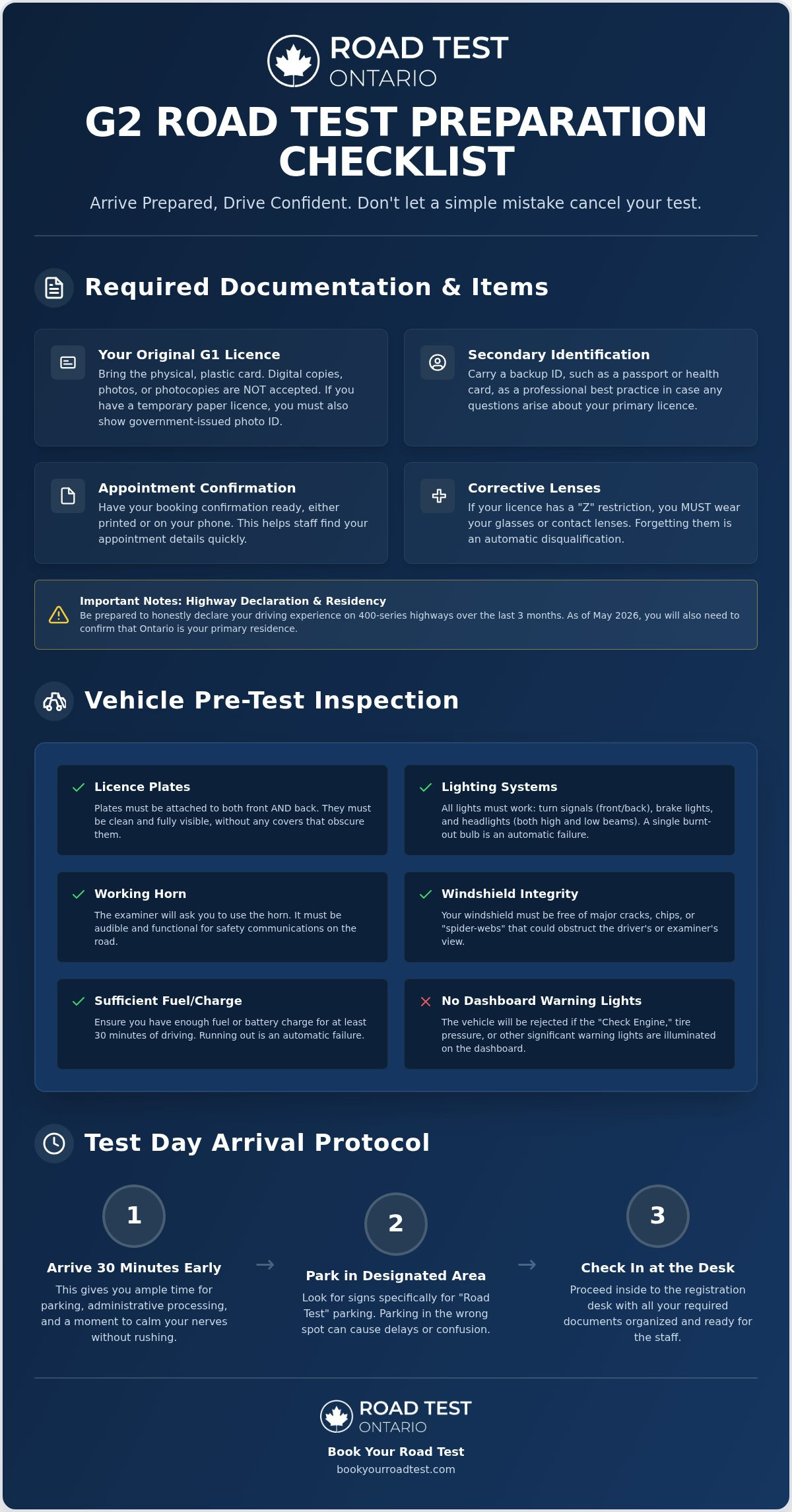
You must present several key items to begin the registration process. Ensure you have these ready in a folder or envelope to keep them organized and clean:
- Your physical G1 licence card: This must be the original plastic card. If you've recently renewed or changed your address and are using a temporary paper licence, you must also provide a piece of government-issued photo ID.
- Secondary identification: It's a professional best practice to carry a backup, such as a passport or health card, just in case there's a question about your primary licence.
- Appointment confirmation: Have your digital or printed confirmation ready. It contains your reference number and helps the staff locate your booking quickly.
- Highway Driving Declaration: Even though the G2 test focuses on residential and urban skills, you'll still need to declare your driving experience to confirm you've spent enough time behind the wheel.
The Highway Driving Declaration Explained
While the G2 exam doesn't typically take you onto major expressways, the Ministry requires you to declare your experience on high-speed roadways to ensure you're a well-rounded driver. You must realize that specific "400-series" highways, such as the 401, 403, or the QEW, are the benchmarks used for this declaration. Examiners look for a consistent history of trips over the last three months. Be honest when calculating your frequency; misrepresenting your experience can lead to an immediate cancellation of your test and the loss of your booking fee.
Valid vs. Invalid Identification
The rules regarding identification are rigid. Digital copies, photos on your smartphone, or photocopies of your licence are never accepted. The physical card is mandatory. If your card is cracked, peeling, or the expiry date is unreadable, visit a ServiceOntario location to secure a replacement well before your test date. Additionally, check your licence for a "Z" restriction. If it's present, you are legally required to wear your corrective lenses, whether glasses or contacts, during the entire exam. Forgetting your glasses is a guaranteed way to be turned away at the desk. When double-checking what to bring to g2 road test centres, remember that as of May 2026, you'll also need to confirm that Ontario is your primary residence during the check-in process.
Ensuring Your Vehicle is Road Test Ready
Your vehicle is essentially your workstation during the exam. If it doesn't meet the official G2 road test requirements, the examiner will disqualify the car. You'll likely lose your appointment fee and have to rebook. When considering what to bring to g2 road test centres, your car is the most complex "item" on the list. It must be in peak mechanical condition to ensure the safety of both you and the examiner.
Before leaving home, run through this essential mechanical checklist to confirm your vehicle is compliant:
- Licence plates: They must be attached to both the front and back of the vehicle. Ensure they are clearly visible and free of dirt or dark plastic covers that obscure the numbers.
- Lighting systems: You'll need functional turn signals, brake lights, and headlights. The examiner will check both high and low beams before the test begins.
- Basic hardware: A working horn is mandatory. Your windshield wipers must function perfectly, and you should ensure your washer fluid is topped up.
- Power source: Ensure you have enough fuel or battery charge for at least 30 minutes of active driving. Running out of fuel during a three-point turn is an automatic failure.
The Pre-Test Mechanical Inspection
The examiner begins the appointment with a walk-around. They'll ask you to activate your signals and tap the brakes while they stand outside. This isn't just a formality; a single burnt-out bulb is an immediate rejection. Check your dashboard for any warning lights. If your "Check Engine" or tire pressure light is on, the centre may deem the vehicle unsafe for the road. Windshield integrity is also vital. Any large cracks or "spider-webbing" in the driver’s field of vision will result in a disqualified vehicle. It's better to realize these issues a week early so you have time for repairs.
Interior Requirements and Cleanliness
The inside of the car must be professional and safe. Clear out any trash, loose water bottles, or clutter from the passenger seat and floor. The examiner needs a clean space to sit and record your results. Crucially, the passenger door must open easily from both the inside and outside. If the handle is broken or the door is jammed, the test won't proceed for safety reasons. Ensure your mirrors are clean and functional so you can adjust them easily. Preparing your vehicle takes time. You can reduce your overall stress by using a G2 road test booking service to handle the logistics of your appointment, leaving you free to focus on these mechanical checks.
The Arrival Process: What to Do When You Get There
Arriving at the DriveTest centre is when the theory of your preparation meets reality. You must arrive at least 30 minutes before your scheduled appointment time. This buffer isn't just for your peace of mind; it's required for the administrative check-in process. If you arrive late, the system may automatically cancel your slot, and you'll lose your fee. When finalizing what to bring to g2 road test centres, remember that your parking spot number is just as vital as your licence card.
Look for the designated "Road Test" parking area. These spots are usually numbered and separated from the general licensing or employee parking. Note your spot number immediately. You'll need to enter this into the kiosk or tell the staff member at the counter to confirm exactly where the examiner can find you.
Parking and Positioning Your Vehicle
How you park matters. It's a professional best practice to reverse into your parking spot. This ensures that when the test begins, you can make a safe, forward exit. Examiners appreciate this foresight as it demonstrates confidence and safety. Avoid parking in "Employee Only" or "Licensing" spots, as these are not monitored for road tests. If the designated road test area is full, don't panic. Circle the lot or wait for a spot to open up rather than parking in an unauthorized zone, which could lead to a delay in your check-in.
Check-In Kiosk Protocol
Once parked, head inside to the self-service kiosk. You'll need to enter your licence number and your parking spot number accurately. This is a great time to review a preparation checklist for your G2 test to ensure you haven't forgotten the items we discussed in previous sections. After the kiosk prints your ticket or confirms your check-in, return to your vehicle immediately. Staying with your car is critical. Examiners often move through their schedules quickly. If they arrive at your numbered spot and you aren't there, they'll move to the next candidate. Missing your examiner is treated as a "no-show," resulting in a forfeited fee and a long wait to rebook. Knowing what to bring to g2 road test check-ins, including your spot number and a sense of punctuality, keeps the process moving efficiently.
Personal Items and Comfort for Test Day
Beyond the documentation and mechanical checks, your personal readiness plays a massive role in your performance. When finalizing your list of what to bring to g2 road test centres, don't overlook the items that affect your physical comfort and sensory perception. Small discomforts can quickly turn into major distractions during a high-pressure exam. If you're too cold or your shoes feel bulky, you won't drive with the precision required for a pass.
Choosing the Right Footwear
Pedal feel is essential for smooth braking and acceleration. You need to sense exactly how much pressure you're applying to the vehicle's controls to avoid jerky movements. Avoid flip-flops, heavy winter boots, or high heels. These types of footwear can obscure the pedal feel or, in extreme cases, get caught under the brake pedal. It's a professional best practice to wear the same pair of shoes you used during your final practice sessions. This consistency ensures you're comfortable with the weight and grip of your footwear before the examiner even sits down.
Managing Distractions
The examiner needs your full attention. Before they enter the car, turn off your mobile phone or place it in "Do Not Disturb" mode. A vibrating phone in the centre console is a distraction you don't need. Clear any hanging ornaments from the rearview mirror. Items like air fresheners or decorative tassels can obstruct your vision and may be flagged by the examiner as a safety concern. Finally, set your climate control to a comfortable, neutral level and ensure the radio is turned off. A quiet environment allows you to hear the examiner's instructions clearly without any acoustic interference.
Legal requirements dictate that if your G1 licence has a "Z" restriction, you must wear your corrective lenses. When you're deciding what to bring to g2 road test appointments, remember that your glasses or contacts are non-negotiable. Ensure they're clean and ready to go. Additionally, dress for the weather. You might spend a few minutes outside the car during the initial inspection. Bringing a bottle of water is also a smart move; staying hydrated while waiting in the car helps maintain your focus and calms your nerves. If you're ready to secure your date, you can book your G2 road test through our platform to save time and reduce the stress of the scheduling process.
Securing Your Spot: Booking Your G2 Road Test
Success on test day depends on more than just your driving skills; it requires a strategic approach to the logistics of the appointment itself. Many candidates find that the most stressful part of the process is simply finding a date that fits their schedule. By organizing your booking early, you can dedicate your energy to mastering the vehicle requirements and documentation we've discussed. When you have finalized your list of what to bring to g2 road test centres, the final step is ensuring your appointment is actually secured and confirmed in the system.
Why Use a Booking Facilitator?
Securing a road test through official portals can often be a frustrating experience involving constant refreshing and limited availability. Using a third-party administrator provides a streamlined, user-friendly interface designed for busy students and professionals who value their time. We operate as an autonomous service provider, independent of the Ministry of Transportation and DriveTest. This independence allows us to offer a specialized road test cancellation finder Ontario, which actively searches for earlier openings that others might miss. This tool is particularly beneficial for those who realize they are ready for their exam sooner than their original date allowed. Our service model is built on transparency, ensuring you understand the administrative support provided in exchange for our service fees.
Final Checklist Before You Leave Home
Before you turn the key in the ignition to head to the centre, perform a quick 30-second mental walk-through. Do you have your physical G1 licence card? Is your vehicle free of dashboard warning lights? Have you confirmed your parking spot protocol? Confidence is built on the foundation of being over-prepared. Ensure you have allotted enough travel time to arrive 30 minutes early without rushing, as a hurried arrival can lead to mistakes during the check-in process. For those who are also interested in motorcycle licensing, the process for M2 road test booking follows similar principles of preparation and punctuality.
Once you pass your test and receive your G2 licence, you enter a new phase of the graduated licensing system. You must hold this licence for a minimum of 12 months before you are eligible to take the full G road test. Use this year to gain experience on high-speed 400-series highways and refine your proactive driving habits. By following this guide and knowing exactly what to bring to g2 road test appointments, you have removed the administrative barriers to your success. You are now ready to focus on the road ahead and secure your independence as a licensed driver in Ontario.
Ready to Earn Your G2 Licence?
Mastering the logistics of your appointment is just as vital as your steering control. By organizing your original identification and ensuring your vehicle meets the examiner's mechanical standards, you remove the administrative stress that often plagues test day. You now have a clear roadmap of what to bring to g2 road test centres, from your highway declaration to your corrective lenses. This thorough preparation provides the peace of mind needed to perform your best under pressure.
As an autonomous third-party provider, we offer expert administrative support and a specialized cancellation finder to help you secure an appointment at over 60 locations across the province. Book Your G2 Road Test Today to find an earlier date and simplify your scheduling process. We're here to facilitate your journey toward becoming a fully licensed driver with efficiency and transparency. You've done the hard work of practicing your skills; now let us handle the frustration of the booking system. We wish you a safe and successful road test.
Frequently Asked Questions
Can I use a rental car for my G2 road test?
Yes, you can use a rental car, but you must ensure the rental agreement specifically allows for road testing. You must be listed as an authorized driver on the contract. Additionally, you are responsible for ensuring the vehicle meets all mechanical standards and that the insurance and registration documents are present in the car before you arrive at the centre for your appointment.
What happens if I forget to bring my physical G1 licence?
You will be unable to proceed with the test and will likely lose your booking fee. DriveTest centres do not accept digital copies or photos of your licence under any circumstances. If you are using a temporary paper licence, you must also present a valid piece of government-issued photo ID. Without the physical card or the paper and photo ID combination, registration cannot be completed.
Do I need to bring a face mask or follow specific health protocols in 2026?
Current 2026 guidelines generally do not require face masks for road tests, though this remains subject to change based on local health advisories. You should verify the specific requirements of your centre 48 hours before your date. While not mandatory, some examiners may still request you wear one; keeping a clean mask in your vehicle is a professional way to show you are prepared for any centre-specific protocol.
Can my driving instructor or a parent sit in the back seat during the test?
No, only the applicant and the examiner are permitted in the vehicle during the exam. This policy ensures the examiner can assess your driving skills without any external influence or potential distractions. Pets are also prohibited from the vehicle. If you require a service animal, you must notify the centre well in advance to arrange for appropriate accommodations during your scheduled road test appointment.
What exactly is the Highway Driving Declaration form?
This form requires you to declare your experience on high-speed roadways, specifically 400-series highways or roads with speed limits of 80km/h or higher. You must confirm you have driven on these roads at least five times in the last three months. Even though the G2 test is residential, this declaration is a mandatory part of what to bring to g2 road test centres to verify your experience.
How early should I arrive at the DriveTest centre?
You must arrive at least 30 minutes before your scheduled time to complete the administrative check-in. This buffer allows you to park in the designated area, note your spot number, and use the kiosk without rushing. Arriving late often results in an automatic cancellation of your slot. Being early also gives you a moment to ensure your personal items, like corrective lenses, are ready before the examiner arrives.
What if my vehicle fails the mechanical inspection on the spot?
If the examiner identifies a safety issue, such as a burnt-out brake light or a cracked windshield, the test will be cancelled immediately. You will lose your appointment fee and need to book a new date once the repairs are finished. This is why a thorough pre-test check is essential. It's one of the most important aspects of what to bring to g2 road test appointments to avoid unnecessary delays.
Is there a specific colour of ink I need to use for the forms?
While most centres utilize digital kiosks for the check-in process, any physical forms you sign should be completed in blue or black ink. Avoid using pencils or unconventional colours like red or green, as these may not scan properly into the official licensing records. Most centres provide pens at the counter, but carrying your own professional blue or black pen ensures you're prepared for any administrative requirement during your visit.


